AI Router Management
An AI-powered Eco Intelligence Dashboard that cut simulated power consumption by ~20%. Third place at Technata Hacks 2024.

- RESULT
- 3rd place at Technata Hacks 2024; ~20% lower power use in simulation
- STATUS
- Hackathon prototype (2024)
- STACK
- PythonFlaskScikit-learnPandasNext.jsGSAP
Quest briefing
The Eco Intelligence Dashboard was built for Technata Hacks 2024. It is an interactive platform for energy efficiency in IT infrastructure. It targets router heat and energy use in large tech hubs like Kanata North.
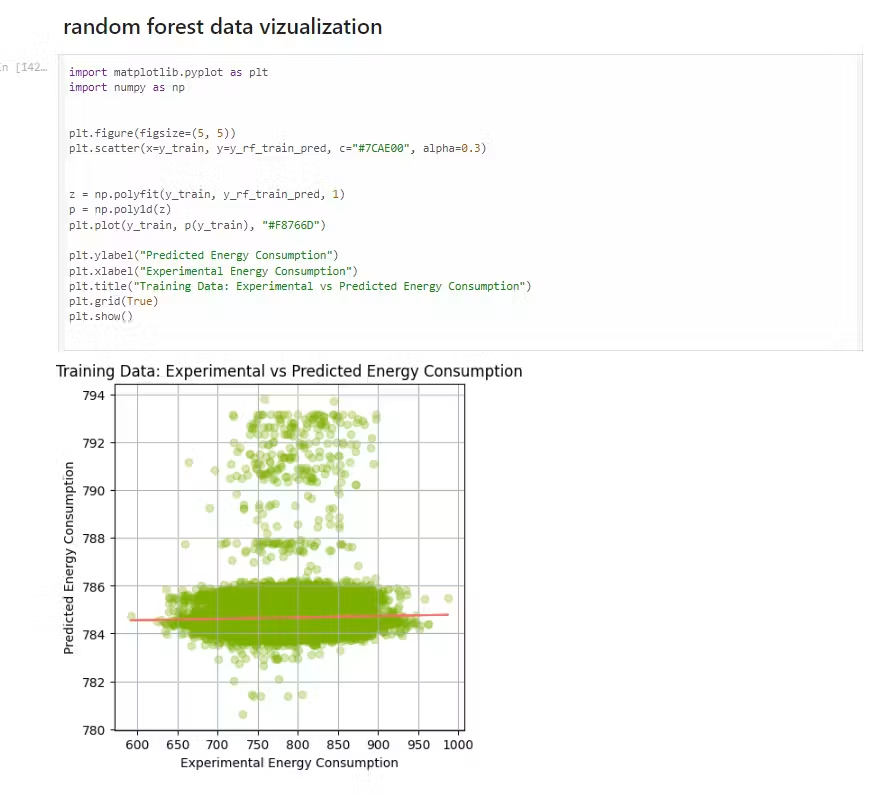
This was my first machine learning model: a random forest regressor trained to predict energy consumption from simulated router heat and traffic data. A REST API connects it to the dashboard for live predictions on the simulated data.

Problem
Routers in IT hubs run continuously, wasting energy and producing heat. Most infrastructure runs at full power around the clock, whatever the traffic.
Solution
An AI-powered system that controls routers. It turns them off when they are idle and reuses their heat for cooling systems.
Key features
- Data Collection — Simulated network traffic using public datasets to train regression models.
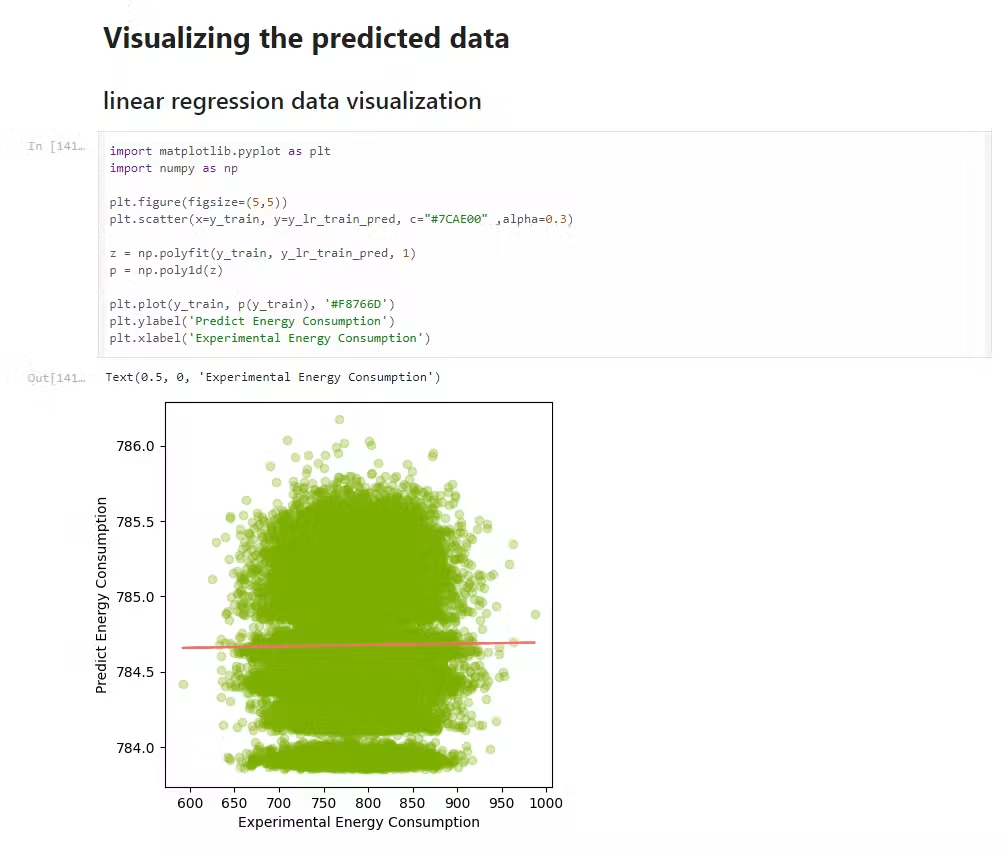
- Linear Regression — Predicted continuous traffic trends and bandwidth usage.
- Random Forest Regressor — Determined optimal power-on/off schedules based on non-linear traffic patterns.
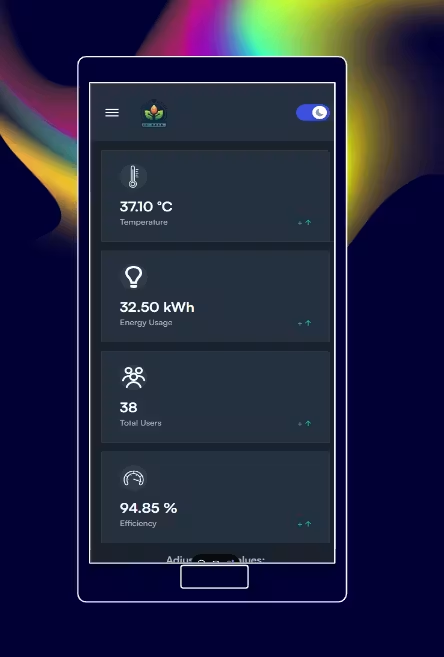
- Interactive Dashboard — Built with Next.js + GSAP animations showing simulated router activity, energy savings, and heat management data.
- API Integration — RESTful backend connecting trained models to the frontend for live predictions and data updates.
Challenges
Data simulation quirks, keeping predictions in sync with the dashboard, and designing the heat-reuse step, which stayed conceptual. Each blocker taught me something I had not used before.
Loot (what was learned)
- Feature engineering on simulated traffic data mattered more than model choice for this problem.
- The gap between "the model works in a notebook" and "the model drives a control loop" is most of the engineering.
- GSAP and Next.js made a quick prototyping loop. Animations got polished before the API was stable.
- First hackathon podium, and a lesson that a tight demo story wins judges.